
The diary was spotted on eBay nearly two years ago, waiting to be auctioned off.
That was before Bos stumbled on it.

“I thought, ‘That is an exhibit waiting to happen right there,’” she said.
She and Jane Wildermuth, dean of the university’s libraries, declined to say what they paid for the diary. They say they spent no public funds. Instead, money authorized by donors was used to purchase the diary, they said.
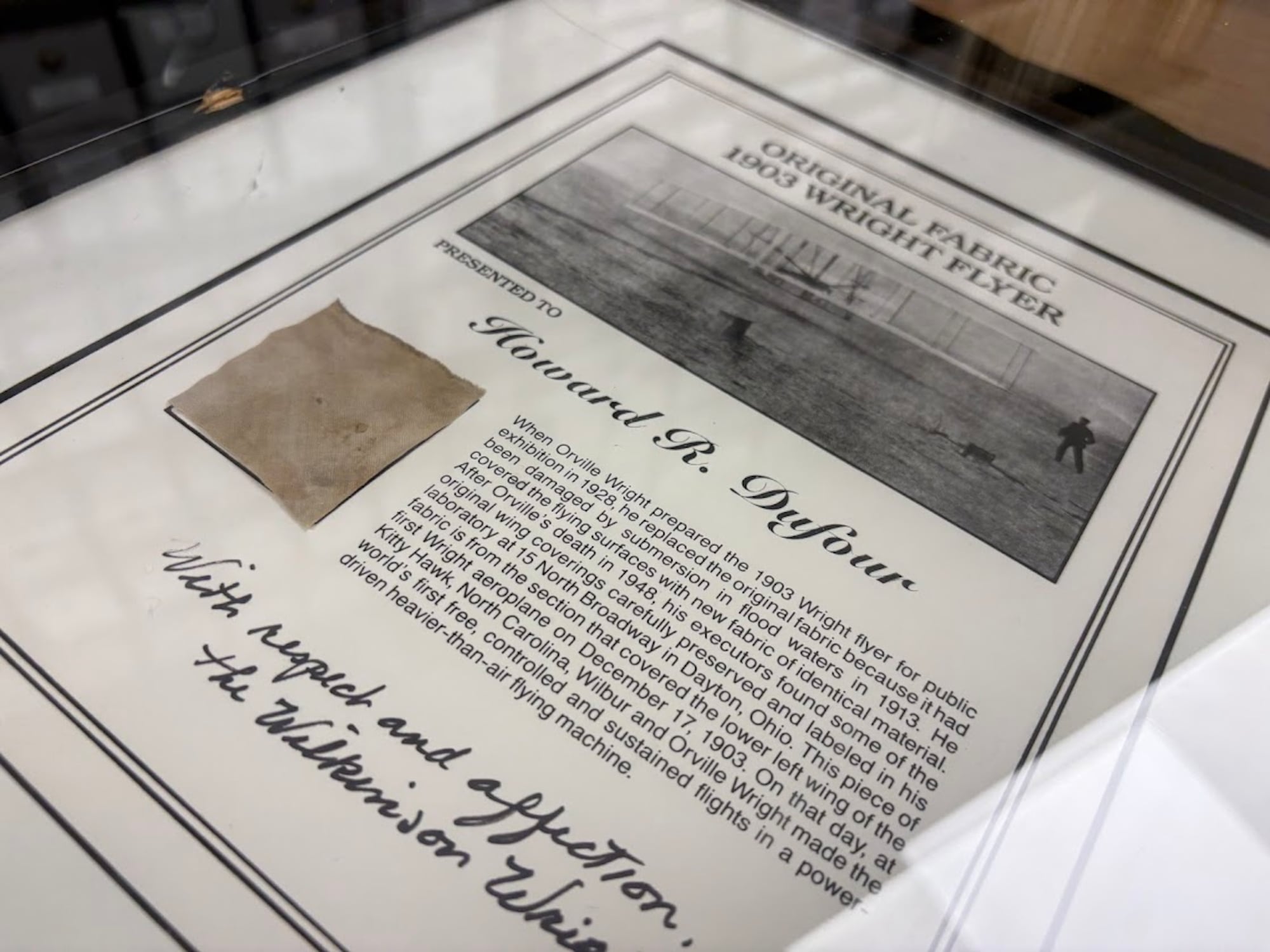
The diary is only one item in an collection of thousands tied to the Wrights, found on the fourth floor of Wright State’s main library, space where a sizeable chunk of Dayton and aviation history are displayed, stored and preserved.
The collection deserves better protection, advocates say.
The university has asked for $5,758,988 through the annual Dayton Region Priority Development and Advocacy Committee process.
There is no immediate funding tied to the PDAC process. Many PDAC proposals, such as Wright State’s, are concepts for which a groundbreaking or execution could be years away.
Instead, the annual process lets governments and nonprofits submit ideas for projects that could use federal or state funding to create jobs or try to improve quality of life. The suggestions can guide local lobbying efforts.
Wright State holds the most complete collection of Wright brothers materials in the world, Wildermuth said.
The collection is diverse, to say the least. It includes the Wrights’ technical library, personal books, family papers, including letters, diaries, financial records, genealogical files, and other documents telling the stories of the lives and careers of Wilbur and Orville Wright (and many of their relatives).
Here, students and historians can find awards, certificates, medals, albums, recordings, and technical drawings.

“Perhaps the most valuable part of the collection is the thousands of photographs documenting the invention of the airplane, their success in accomplishing something many thought not possible,” Wildermuth said.
Original photos provide “a visual history of that journey,” she said.
Primary sources — photos, documents, papers, diaries written by those who were making history at the time — are crucial, Vanden Bos said.
“We’ve found in this digital environment, it’s really important to let the students connect with the actual documents of history,” she said. ”It really creates an enthusiasm, it opens up their minds, it connects them to a different moment in time."
Archivists say the overall collection is in good condition.
They want to keep it that way. The PDAC proposal seeks financial support to modernize the archives storage and exhibit area to better protect the materials while making them more accessible, Wildermuth said.

Advocates say upgrades to fire suppression, security, and HVAC systems will help extend the lives of these materials.
Said Wildermuth: “This collection is a foundational part of Dayton’s history.”
About the Author